The risks of using wax sheets from China for bees and human health
According to the report of the European Food Safety Authority published in May 2020, it is required to ban any import of products for use in beekeeping from China, due to risks caused by side effects on bees and potentially risks to humans.
Summary:
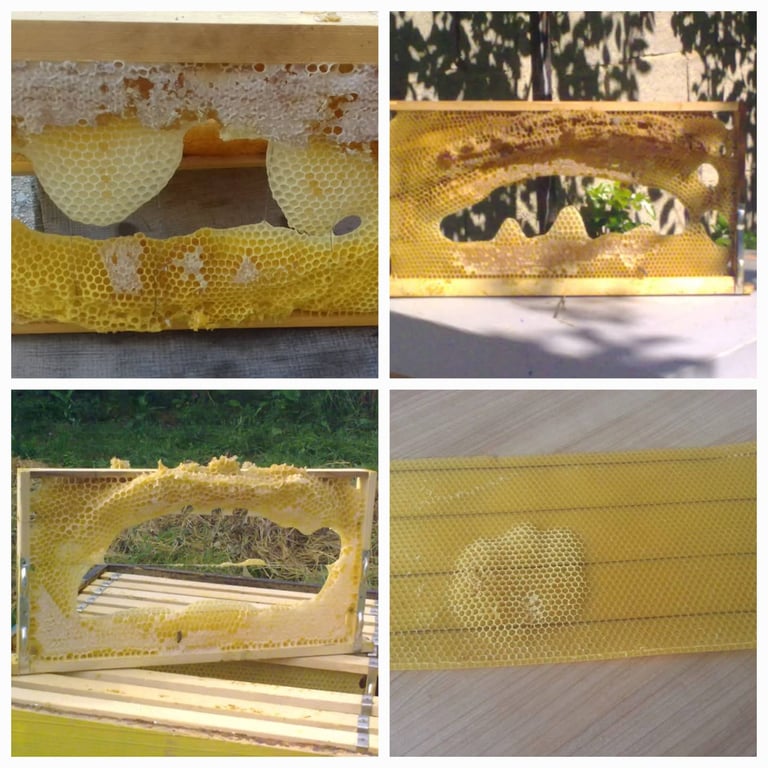
Implications for bees – According to this report, this wax contains synthetic gums, stearic acid, and palmitic acid. This composition shows negative effects on colony and egg development (Aupinel, 2018; Reybroeck, 2017 and 2018). Based on samples taken from wax sheets from China, a high content of synthetic gums and non-organic acids is observed, which gradually affects the increase in bee mortality by about 45%.
Implications for humans – Although the consumption of honeycomb honey on the market is lower, there is still a possibility of the presence of prohibited substances. Due to the lack of consumption data regarding the proportion of wax compared to the wax sheet, there is also the possibility of absorption of contaminants and their transfer into honey, but data and details are lacking. Nevertheless, it remains an issue that requires attention.
According to data from the Apimondia International Beekeeping Congress (2019), Chinese wax sheets may contain an extremely high percentage of paraffin, up to 90–95%, meaning they are often made with very little real beeswax.
Therefore, it is important to use natural wax sheets that have undergone a sterilization process, which is carried out at temperatures above 120 degrees. Only in this way is the quality of the wax sheets guaranteed. For natural beekeeping and natural honey, natural products should be used rather than synthetic ones.